Rest Is Not Optional: How Sleep Impacts Mental Health
March 2, 2026
Sleep is not a luxury or something to prioritize only when life slows down. It is a basic biological need that plays a critical role in mental and emotional well-being. During National Sleep Awareness Week, March 8–14, we highlight the importance of healthy sleep and the impact it has on overall health, safety, and quality of life.
At the MEPHC, we work to support community health through education and prevention efforts. Sleep health is a key part of that work, as it affects mental well-being, daily functioning, and long-term health.
According to the CDC, adults should aim for at least seven hours of sleep per night, yet many people routinely get less than that. Over time, insufficient sleep affects not only physical health, but also how people think, feel, and cope with stress.
When Sleep Suffers, Mental Health Does Too
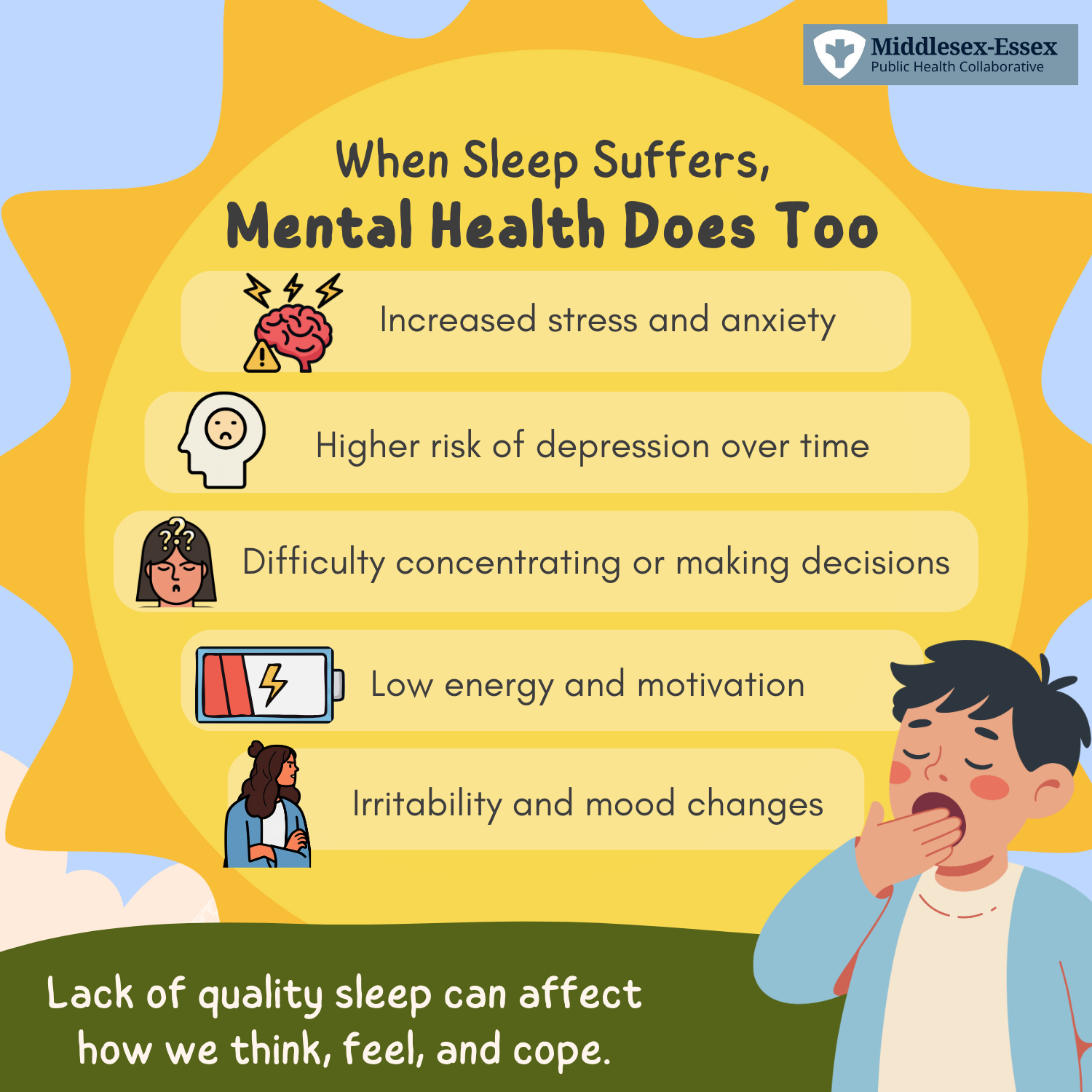
Sleep and mental health are closely connected, and the relationship works both ways. Stress, anxiety, and depression can make it harder to sleep, while poor sleep can worsen mental health symptoms.
Research summarized by the CDC shows that people who do not get enough sleep are more likely to experience frequent mental distress, including feelings of sadness, anxiety, and irritability. Chronic sleep deprivation has also been linked to a higher risk of depression and difficulty regulating emotions.
When the brain does not get adequate rest, it becomes harder to manage stress, focus attention, and make decisions. Over time, this can affect relationships, work performance, and overall quality of life. These effects are especially common among parents, caregivers, shift workers, and people balancing multiple responsibilities.
Poor sleep is not a personal failure. It is a public health issue influenced by stress, work schedules, caregiving demands, screen use, and environmental factors.
Why Small Changes Matter
The idea of perfect sleep can feel overwhelming. Public health research shows that small, consistent habits often have a greater impact than major lifestyle changes.
Improving sleep does not require doing everything at once. Even modest adjustments can support better rest and improved mental health over time.
Small Changes That Can Support Better Sleep
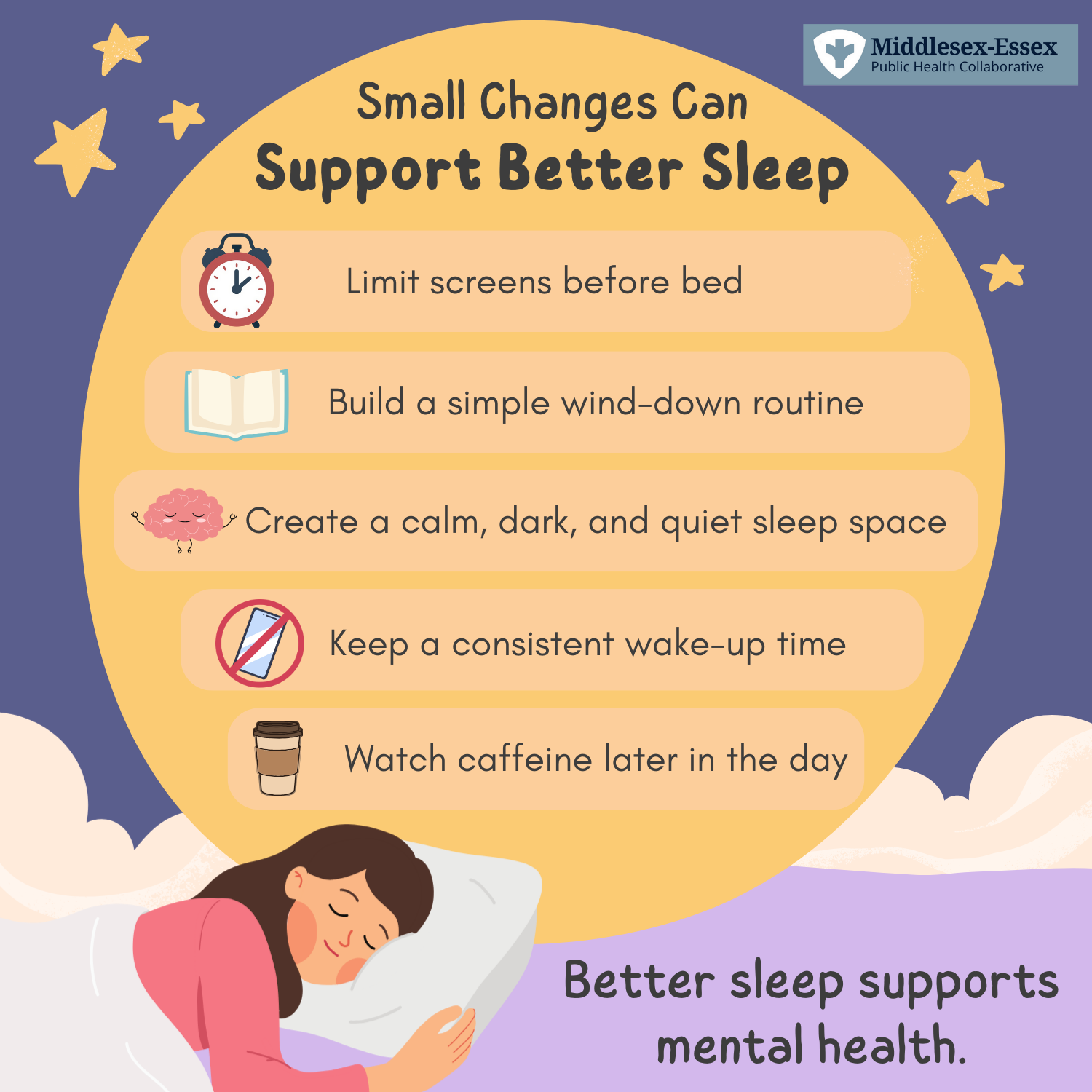
The CDC and NIH recommend several evidence-based strategies that are realistic and accessible for many people:
- Keep a consistent wake-up time, even on weekends when possible
- Create a calm sleep environment that is dark, quiet, and cool
- Limit screen use before bed, especially phones and tablets
- Be mindful of caffeine later in the day
- Build a simple wind-down routine, such as reading, stretching, or listening to calming music
Focusing on progress rather than perfection can make healthy sleep habits more sustainable.
Sleep as a Public Health Priority
Sleep affects mental health, physical health, safety, learning, and productivity. When communities support healthy sleep through education, workplace practices, and access to care, the benefits extend beyond individuals to families and neighborhoods.
National Sleep Awareness Week is an opportunity to reflect on sleep habits and consider small steps that support rest and mental well-being. Supporting better sleep supports healthier communities.
Sources