How to Protect Yourself from Tick Bites this Spring and Summer
May 19, 2026
As temperatures rise and more people head outdoors to enjoy parks, trails, gardens, and neighborhood events, it’s important to remember that tick activity also increases across Massachusetts during the spring and summer months.
Ticks can be found in wooded areas, tall grass, leaf litter, and even in backyard spaces, making prevention an important part of spending time outside safely. Fortunately, a few simple habits can significantly reduce the risk of tick bites and tick-borne illnesses such as Lyme disease.
A highly effective way to remember your daily outdoor safety routine is to focus on three simple actions: Repel, Check, and Remove.
1. Repel: Before You Go Out
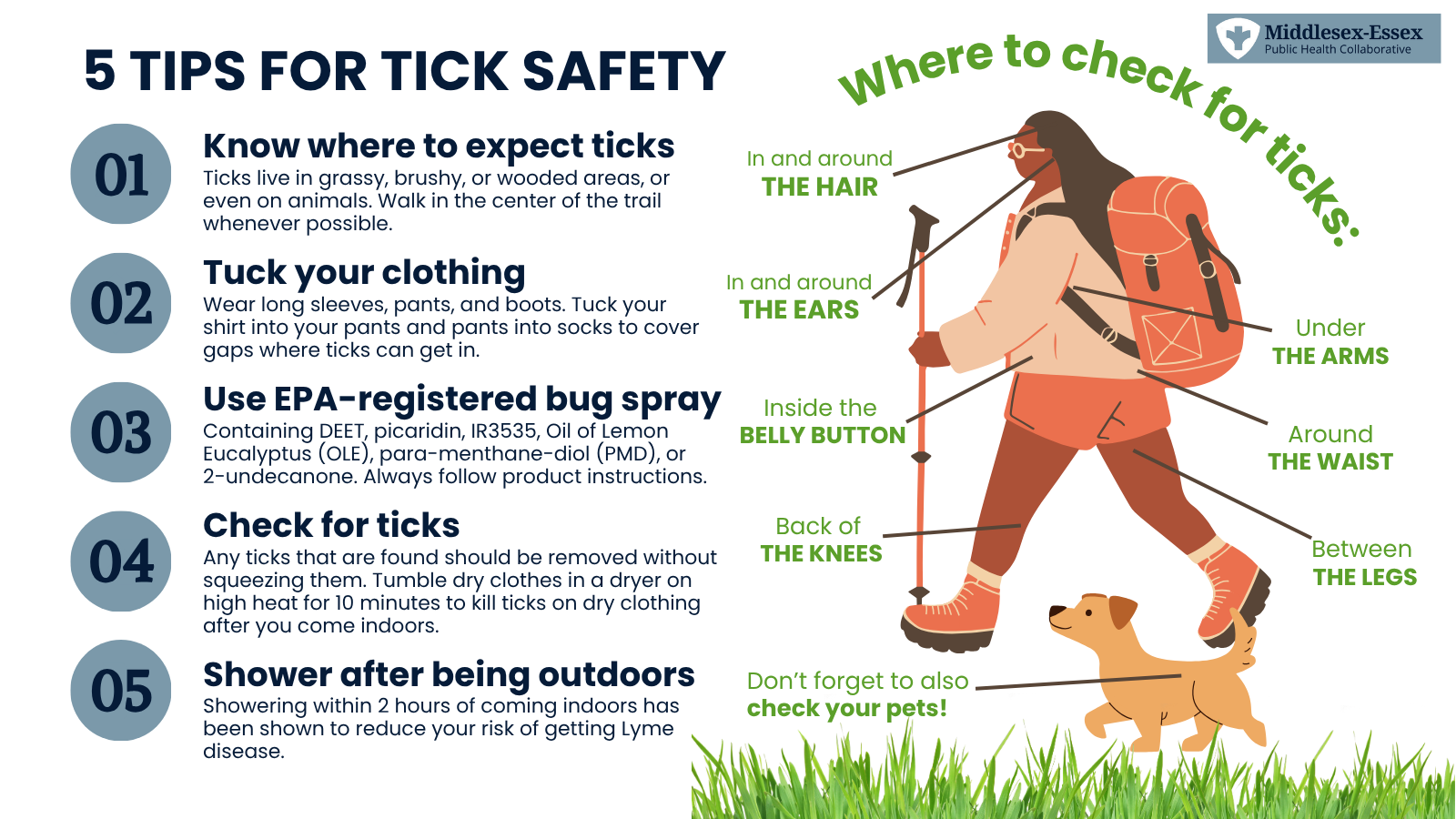
- Dress Smart: Wear long-sleeved, light-colored clothing so ticks are easier to spot before they reach your skin. When hiking, stay on cleared paths rather than brushing against tall grass.
- Use Effective Protection: Apply an EPA-registered insect repellent (such as those containing DEET, permethrin, picaridin, or IR3535). The EPA features an online search tool to help you find the repellent that best fits your specific outdoor activity.
2. Check: When You Return Home
- The 20-Minute Window: The CDC recommends showering within two hours of coming indoors. Showering can significantly reduce your risk by washing away unattached ticks.
- Do a Targeted Tick Check: Carefully inspect yourself, your children, and your pets. Pay close attention to hidden spots: the hairline, ears, waist, behind the knees, and under the arms.
- Tumble Dry: Throw your outdoor clothes into the dryer on high heat for 10 minutes to kill any hidden ticks.
3. Remove & Monitor: If You Find a Tick
If you find a tick attached to the skin, MDPH guidelines advise removing it promptly to lower the risk of infection:
- The Right Tool: Use fine-tipped tweezers to grasp the tick as close to the skin's surface as possible.
- The Right Technique: Pull upward with steady, even pressure. Do not twist or jerk the tick. Clean the bite area thoroughly afterward with rubbing alcohol or soap and water.
- Watch for Symptoms: For the next few weeks, monitor for a rash, fever, fatigue, joint pain, or flu-like symptoms.
When to Contact a Healthcare Provider
Reach out to a medical professional right away if you develop any of the symptoms listed above, if the tick was attached for a prolonged period, or if you have any lingering concerns about a bite.
Resources
- Mass.gov Tick-borne Disease Prevention
- EPA Repellents: Protection against Mosquitoes, Ticks and Other Arthropods
- CDC Ticks